Energiewende or Energieselbstmord?
In 2023 Germany closed the last of its remaining nuclear reactors. As the last of these reactors cool, it seems Germany has sealed its fate. The nation aimed to lead by example through its transition to renewable energy—the Energiewende. But today a green utopia seems ever more distant. Germany now plans to open more lignite mines to stave the loss of its heavy industry. Is Germany’s nuclear shutdown an energy transition or an act of economic self harm?
Germans thought that renewable energy was a wise investment. In 2010 they announced the Energiewende—the energy turnaround—legislation and investment to reduce greenhouse gas emissions relative to 1990 by 80–95% and generate 60% of the electricity from renewable sources by 2050. All this without hurting Germany’s domestic industry. It looks like these investments have paid off: since 2010 the German government has invested 200 billion Euro into renewable energy, and built enough renewable capacity to power 51% of electricity consumption in 2020. It looks like Germany will be typically efficient, hitting climate goals early and under budget. That’s why, in 2023, it seemed like a good idea to shut down all Nuclear power.
However, the Energiewende has been mostly a failure. As of 2018 Germany was the fifth-largest consumer of oil in the world, accounting for 34.3% of all energy use in 2018. Another 23.7% came from natural gas. In terms of reducing CO2 emissions Germany has comparatively done less well than international peers. In Ontario last year electricity emissions were 76g CO2/kWh, the UK’s were 200. France, next door to Germany, emitted 39 g CO2eq/kWh. And Germany’s? A whopping 400. All that installed capacity means nothing if you don’t use it.
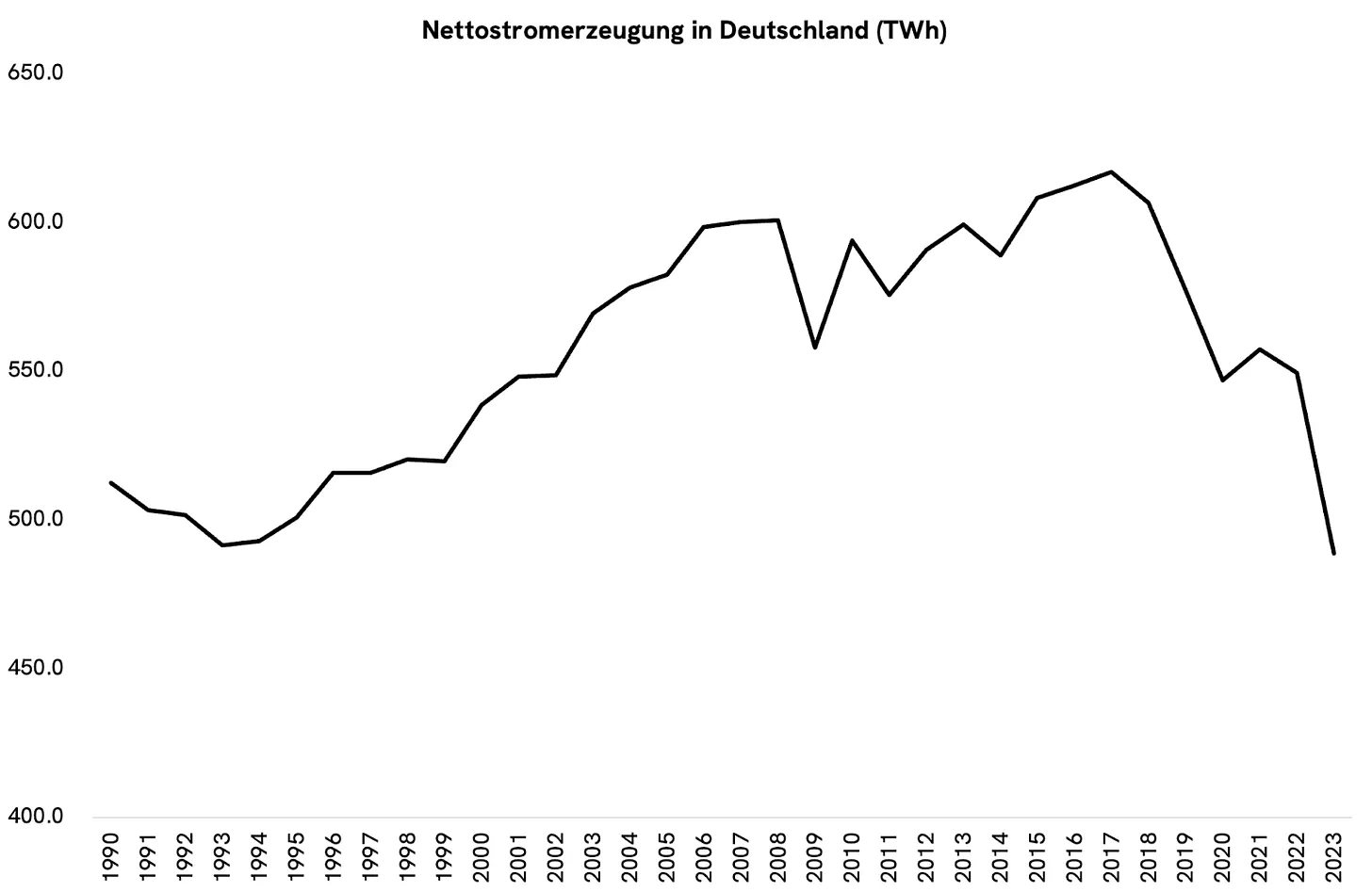 Figure 1. German Energy output fell from a high of 600 TWh in 2016 to 500 TWh in 2023.
Germany’s energy aspirations have hit hard realities. Despite ambitious targets, new renewable projects are stymied by local opposition. The country has seen its energy production capacity plummet by 15% since 2016, despite being Europe’s largest electricity market. The economic repercussions are stark—industrial output is dwindling. In some sectors, like chemical production, outputs are hitting lows not seen since ABBA was on the charts.
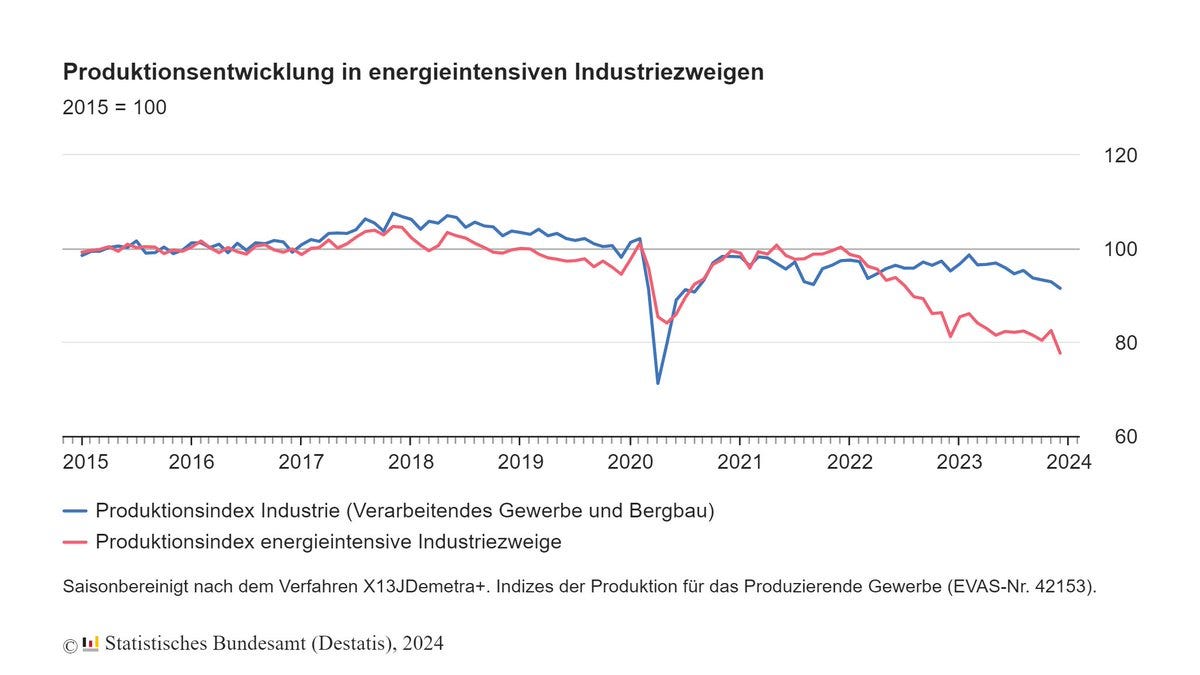 Figure 2. Industrial output fell again Dec, with a sharp drop in the energy-intensive sector (red line). Annual data now shows that German chemical production has plunged to a 28-year low.
Germany’s dilemma is that its renewable energy sources are not enough to meet its energy demands. In fact Germany imported over 63% of its energy in 2021, with a heavy reliance on Russian gas. This is not only geopolitically volatile, but actively against Germany’s political interests. Further, the country has delayed closing its coal plants until 2038.
Reactivating its nuclear plants isn’t an option but an inevitability. What else will provide the energy needed to power beloved heavy industry without the carbon emissions? The alternative—continued reliance on fossil fuels—stands in stark contrast to its climate goals. The consequence is a deindustrialized state unable to wield its former economic clout. The path Germany chooses now will not only determine its energy landscape but also its role on the global industrial stage. The Energiewende, envisioned as a leap into a green future, may well be remembered as an Energieselbstmord—an energy suicide. Pragmatic steps must be taken to balance green aspirations with economic and industrial realities. Germany will have to turn its reactors back on, whether it likes it or not.